

The Pontificia Universidad Católica de Valparaíso was awarded the MetaRed S Leadership Seal, an international accolade granted by the Universia Foundation, which recognizes Iberoamerican higher education institutions for their progress and committment to sustainability, underscoring the maturity reached in the implementation of policies and actions on this matter.
This honor places the university among the leading chilean Institutions in this field and highlights the institutional work developed during the last years to integrate sustainability in its management, governance and general university work.
The director of PUCV Social Engagement and Sustainability, Karina Toledo, highlighted the fact that this award “reflects the maturity our institution has achieved in this matter, something that did not happen overnight. It has been an evolution throughout time and in tune with the current demands to higher education”.
Likewise, she noted that the Institution has been a pioneer in the development of policies in this area. “As a university we have been working on these issues for many years. We were the first university in Chile to create sustainability report in 2009 and today our strategic planning incorporates the committment to move forward towards a sustainable university”, she explained.
This accolade is directly connected to the work propelled by the PUCV in the context of the Clean Production Agreement (APL, for its name in Spanish), Sustainable Higher Education, an initiative that allowed to consolidate a common foundation and institutional goals in environmental, social and governance issues.
“We are also a university that delivered 100% and obtained the Higher Education APL last year. In addition, we have different areas that address sustainability in all its dimensions: economic, social and environmental”, Toledo explained.
In this context, she added that sustainability today also includes challenges that are linked to inclusion, gender and community engagement. “It is not only about contributing through projects or research, but that our institution will become an example for sustainability and incorporates these issues in its own work”, she indicated.
Recognition with international perspective
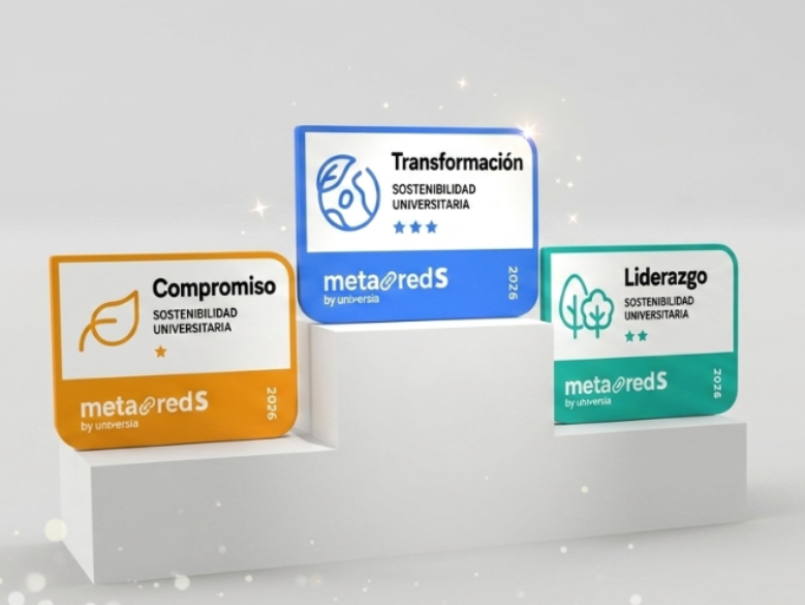
MetaRed S awards this recognition for the first time at the Iberoamerican level and considers different levels of institutional progress: Committment, Leadership and Transformation. In the Leadership Category, the PUCV was honored together with other chilean organizations such as the Universidad Católica de Temuco, AIEP, Pontificia Universidad Católica de Chile and the Universidad Bernardo O’Higgins.
Toledo especially valued the international nature of this honor. “Although we participate in different sustainability rankings, this recognition has the particularity of being Iberoamerican and evaluating tangible indicators such as governance, institutional policies and implemented actions”, she stated.
Among the elements considered for the obtention of the seal we find the incorporation of sustainability in the 2023-2029 Institutional Strategic Development Plan, the existence of policies and structures dedicated to this issue, in addition to tangible actions developed in different areas of the university life.
Education and a culture of sustainability
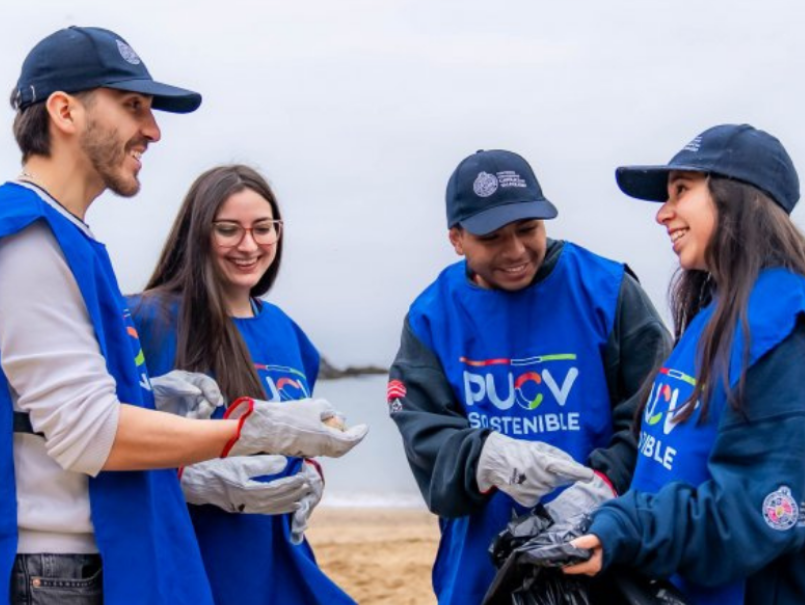
The director also emphasized that one of the main challenges is to strengthen the transversal nature of this approach in the whole institution. Along this line, she highlighted that sustainability at the PUCV has also improved through initiatives oriented towards promoting cultural change within the university community, such as Recycling Week, the Students as Agents of Change, gender equality workshops, among others. “All of this responds to an approach about how we want to continue to build a society and how we incorporate this perspective in different moments of the university”, she added.
She also added that “it is very important to integrate this approach to our teacher education programs starting with undergraduate programs, updating study plans and incorporating sustainability as a requirement within formative trajectories”.
Karina Toledo added that these challenges also dialogue with principles propelled by the Global Educational Pact, an initiative promoted by Pope Francis, that invites educational institutions to actively contribute to the building of a more just, inclusive and sustainable society.
“The Global Educational Pact” places the importance on fundamental issues such as the role of women, the renewal of economy and caring for the common home. As a university, it is part of our identity to care for the issues and challenges that society faces today”, she stated.
Finally, she highlighted that this honor reasserts the institutional committment to sustainable development and to current social issues. “The challenge now is to maintain and further all the work done, in order to strengthen a university culture that contributes in a tangible way to sustainable development, she concluded.
By Daniela Lorca
Strategic Communications Department