

With an investment that reaches US$50 in infrastructure between 2023 and 2026, the Pontificia Universidad Católica de Valparaíso develops one of the most relevant modernization processes of its recent history. New buildings, recovery of patrimonial facilities, spaces destined to student wellbeing and strategic projects give shape to a university that prepares to face the challenges of higher education and plan for its Centenary celebration.
The transformation of university infrastructure responds to a long-term institutional policy that has performed deep renovations on PUCV campuses. Through a project portfolio, the University strengthens teaching, research, innovation, student life and community engagement, consolidating spaces that agree with the standards of an institution that is accredited for 7 years and committed to future challenges.
This vision is expressed in the 2023-2029 Institutional Strategic Development Plan, which recognizes infrastructure as a core element to strengthen the quality of training, propel scientific and technological development and offer better conditions for the whole university community.
The plan also establishes the creation of environments that promote healthy coexistence as a priority, together with wellbeing and quality of life on campus. Among its objectives the development of a sustainable urban model stands out, together with environmental management plans that allow it to move forward to become carbon-neutral in 2035. In addition, the university is enabling common spaces oriented towards enriching the university experience and supplementing academic activities, favoring integration, encounter and student life.
The effort displayed - the result of the financial strength of the institution for more than 20 years - reflects a sustained investment policy that has allowed to expand, renovate and modernize the institutional infrastructure, directly benefiting students, scholars and staff. The construction of new buildings, the recovery of patrimonial infrastructure, the modernization of existing facilities and the improvement of equipment and furniture respond to a common goal: offer more comfortable, functional, technological and sustainable spaces, capable of responding to the new ways of teaching, learning, researching and working.
“We have gone from having 120 thousand built sq.mts in 2010 to surpassing 200 thousand st.mts destined to our community today”, Alex Paz, Vicerector of Administration and Finances, noted. He also emphasized that it is not only about numbers but about the quality of the spaces. “Depending on the year, the university has assigned around 15% of its budget to investment, a high number within the context of higher education. This has been possible thanks to everyone at the university, who have contributed to a correct and good use of the resources”, he emphasized.
The authority stated that the PUCV is updating its physical space Master Plan and the directing plans of each campus for the next 30 years. This new vision incorporates elements such as safety, services, sports, rest and fundamentally, sustainability as a structural line.
Infrastructure for the future
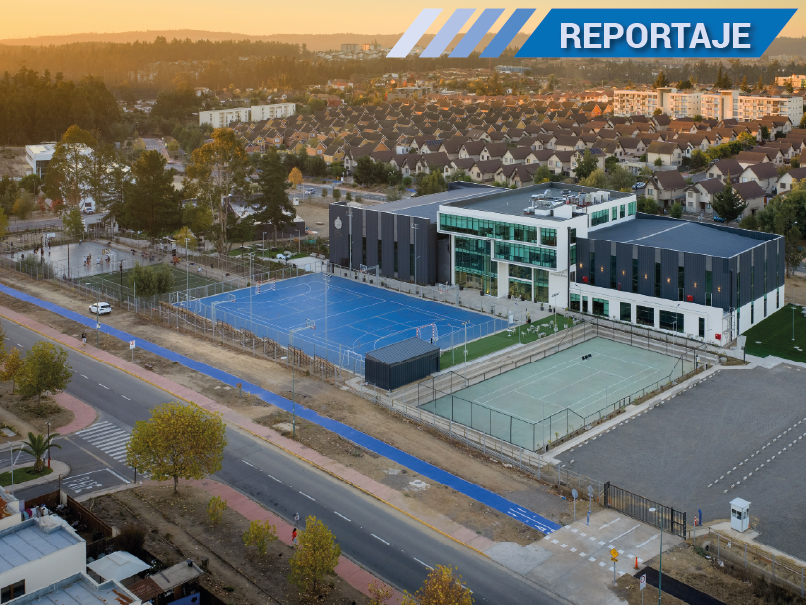
One of the main investment focuses has been the Curauma Campus, consolidated today as one of the most important development cores of the university. A new modern lecture hall was built on this campus, equipped for new teaching methodologies, in addition to the new building of the Physical Education School, which supplements the recently inaugurated Sports Center.
These last projects, with investments over $12 million, strengthen the integral training of students, encourage the practice of sports and expand the spaces destined to university life.
Adding to the previous developments there is the new Student Services building at the Engineering Faculty, designed to concentrate different academic and wellbeing support units in one single space, facilitating a more well-rounded attention and improving the experience of those that are part of the student community.
This modernization process also includes new high-level academic works, such as the Geography Institute building, designed to strengthen research and training in territory sciences, and the facilities of the new Music Institute building at the Campus Sausalito, inaugurated in 2024, that incorporated classrooms especially equipped for teaching, instrument practice, rehearsal and artistic creation.
Spaces thought for wellbeing
The university’s investment policy goes beyond building construction. During the last years there has also been an integral renovation process of the spaces destined to university life, through the modernization of cafeterias, libraries, study rooms, common areas and various services for students.
The new Student Services and Support Center is part of this new context, located at the first floor of the Monseñor Gimpert Building, in the Brasil corner. This space was born with the purpose of offering a more integrated university experience, centralizing various services, optimizing response times and strengthening support throughout the academic trajectory.
The initiative considered an investment close to $400 million, and responds both to international trends in higher education and commitments taken on by the rectory to strengthen student wellbeing and place people at the center of the institution’s work.
In addition, 2027 will see the inauguration of services destined to students at the Sausalito Campus in Viña del Mar, facilities that will be located at the former gymnasium in the Physical Education School, which will be renovated and will become a building centered on students and learning.
Simultaneously, different university facilities have incorporated new furniture, technological equipment and accessibility, climatization, lightning and connectivity improvement, creating more inclusive, comfortable spaces that are prepared to respond to the current needs of the university community.
“The university’s main activity is carried out in person, in a simultaneous concurrence of the university community. In this scheme, the purpose is to offer the best possible conditions for the good development of these types of activities. We have important challenges because the university has increased its number of students and the needs are increasingly more diverse in terms of generating support. On one hand, there is the increasing number of square meters destined to people; on the other, said square meters have more comfortable conditions; and the spaces provide adequate services to people during their time of permanence”, the vicerector stated.
In this respect, the director of Campus Infrastructure and Management, Enrique Escobar, noted that the institution has significantly renovated its furniture through direct imports, increasing the capacity of recreational and study spaces with ergonomic and modern designs. Simultaneously , he highlighted the commitment to a circular economy, through the adaptation of some furniture by local microbusinesses.
Escobar also emphasized classroom configuration, which has evolved to adapt to new teaching methodologies and current technological needs. “Between the end of the first semester of 2025 and August of this year, we are incorporating about 2,500 new seats in lounges exclusively for student use,” the director added.
Sustainable University
According to Vicerector Paz, sustainability has been incorporated not only as a supplementary part to the development of infrastructure in the study house, but as a founding and structural line of it, covering all phases, from the design to the implementation and maintenance.
It is worth noting that the 2023-2029 Strategic Development Plan strongly picks up on sustainability as a central pillar through meeting the SDG (Sustainable Development Goals). The university set a goal for the year 2035, “which demands mostly from ourselves in contrast to other higher education institutions. From the Vicerectory of Administration and Finances we are in charge of a line related to environmental management of university campuses”, Paz emphasized.
In tangible terms, there’s been work done in the recycling field, and the efficient use of hydric and energetic resources. As an example, the Curauma campus currently has one of the most important photovoltaic energy generation plants in the nation’s university context. “We will replicate this in other university facilities. Between 2026 and the beginning of 2027 a similar plant should start functioning at the Agronomy School”, he added.
In this sense, the authority mentioned what is considered a milestone in this field: the new School of Food building, which had its first stone laid in 2025, a totally sustainable construction and built with structural wood. “This building will fully agree with the goals of having a better infrastructure linked to the sustainable strategy”, he highlighted.
He added that the project “will have environmental certifications and will optimize the use of natural light and efficiency of hydric and energetic resources. We hope to finish the design during the second semester to begin its construction in 2027”, he added.
For its part, the director of Campus Management and Infrastructure, Enrique Escobar, highlighted the installation of 15 hydration points in different locations of the university. “Only in the Sausalito campus, during last year we had 100 thousand refills, an aspect that, he emphasized, promotes water consumption and replaces the use of plastic bottles”.
This initiative is supplemented with the setting up of recycling points for cardboard, plastic and technological items on all campuses, with materials collected periodically. “During the past year we achieved the collection of 75 tons of material destined for recycling. In addition, we dispose of dangerous lab waste (acids) with controlled collections by authorized companies”, he added.
Safety
Escobar also referred to the implementation of technological improvements to strengthen safety and control of access to university facilities through the use of turnstiles, QR codes and cameras with artificial intelligence. These measures seek to protect both material resources and the wellbeing of the community in faculties, laboratories and common areas.
“We will continue to strengthen this work, because we are convinced that feeling safe within university spaces is an indispensable condition for the development of academic life”, Escobar emphasized.
This equipment adds to the work performed by assistance vehicles in the Brasil corner and the Sausalito Campus, places of great student concentration. “As students need some type of support, the vehicle arrives and the correspondent participation protocols are activated from the Student Affairs Office” he added.
Recovering heritage to look into the future
Preparation towards the Centenary also considers a decisive bet on recovering and adding value to the architectural patrimony of Valparaiso and Viña del Mar, reasserting the commitment of the university with the history and development of both cities.
Among the signature projects we can highlight the acquisition of Casa Italia, a historic building in Viña del Mar that is currently under renovation. Since its incorporation to the university patrimony, actions such as garden recovery, structural stabilization and the creation of a definitive restoration project have taken place, protecting the architectural value of this residence built between 1914 and 1918. Behind the old building, a new one will be constructed for the Law School and Faculty.
The acquisition of Casa Losada adds to this initiative. The house is located in downtown Viña del Mar, and will strengthen the development of graduate programs and continuous training, expand institutional presence and create new spaces for academic activities.
Built in 1929 and declared a Historical Conservation Building in 2016, the house is more than 1,000 sq.mts, built on a 2,500 sq.mt land, strategically in the corner of Avenida Libertad and 8 Norte.
For Vicerector Álex Paz, these initiatives reflect a vision that understands institutional growth not only from construction of new infrastructure, but also from recovery and preservation of urban patrimony, contributing to the conservation of buildings of high historical value for future generations.
“The goal is to reconcile the need for physical space for our university with the possibility of rescuing and adding value to infrastructure that is relevant to cities in our region. Our line of improvement and development of patrimonial infrastructure has two aspects: from the buildings that have a patrimonial status at the university, such as the Central Headquarters, which is a national monument, and other buildings, such as the History Institute and the Mathematics Institute, facilities in which there has been recovery work done”, he indicated. On the other hand, he noted that new buildings “have been added by the university, with an academic and university purpose, such as Casa Italia and Casa Losada”.
Financial Independence
Creating a third avenue for institutional funding that will strengthen the sustainability and autonomy of the Pontificia Universidad Católica de Valparaíso is the purpose of the PUCV Endowment, a patrimonial fund of perpetual nature recently created by the university to plan its long-term development. Its resources are destined to support strategic areas such as student scholarships, research, innovation and the development of new university infrastructure.
This instrument has become a pillar in order to consolidate the institutional system of scholarships and loans, strengthen research and innovation, promote international mobility and support the university’s growth. With initial resources coming from non-operational surplus, the PUCV Endowment was created with the mission of progressively incorporating new donations and philanthropic contributions, encouraging a culture of collaboration and co-responsibility with a higher education of excellence.
Its administration is carried out by the Patrimony Management Direction at the Vicerectorate of Administration and Finances, department that carries out a monthly follow-up to the fund’s performance and fundraising initiatives, ensuring technical management that is transparent and aligned with the strategic goals of the institution.
In that context, the Vicerector of Administration and Finances explained the origins and scope of this initiative. “The Endowment is a key part of our financial planning and institutional sustainability. It was created as an instrument during this rectorate as the result of a financial situation that allowed us to direct funds to missional and structural projects. This is a patrimonial fund of perpetual nature that allows funding current activities and its future growth. It intends to be a vehicle to attract external donors”, the vicerector of Administration and Finances explained.
The vicerector also added that the Superior Council of the university approved an operational design based on two supplementary strategies: one that is oriented towards fundraising and the other towards resource administration. A directory presided by the rector was established together with a specialized structure to encourage engagement to potential donors and strengthen the development of the patrimonial fund.
“The main goal is to offer the university greater sustainability and increasing financial independence. This is a long-term goal with the purpose of incorporating a third founding core for institutional financing, allowing to gain greater autonomy and contribute to the development of the university in various programs” the vicerector finalized.
By Cristian Croce
Strategic Communications Department