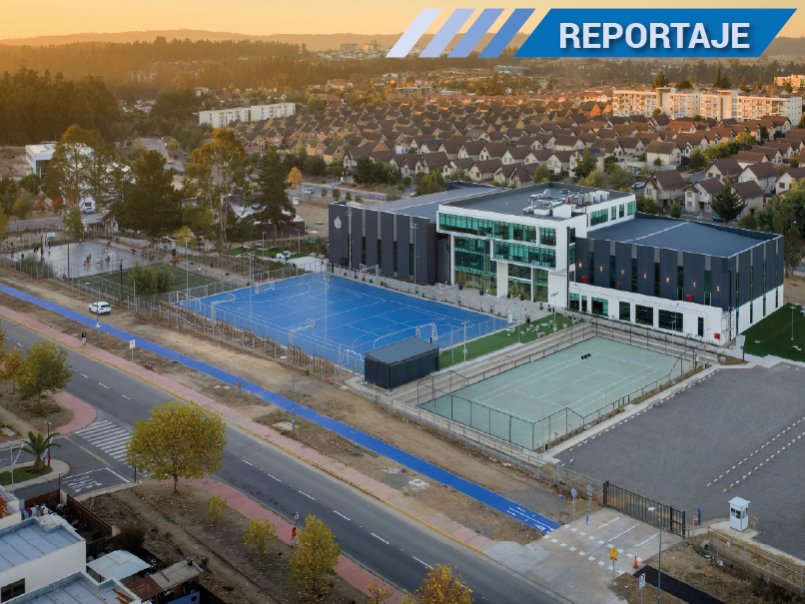


The Pontificia Universidad Católica de Valparaíso (PUCV) has consolidated internationalization as a strategic core of its development, permanently improving academic excellence, international cooperation and the integral training of students. This vision is expressed in a strong collaboration network with universities, research centers and organizations in the five continents, which broadens the opportunities for exchange, research and innovation with global impact.
“From the General Direction of International Affairs (DGAI for its name in Spanish), we are strengthening our ties to countries, regional blocks, universities, thought centers, foundations and actors from the business, political and diplomatic world. Thanks to the prestige and placement achieved by our institution, we have managed to establish active agreements that open opportunities for international mobility for our students”, professor Orlando de la Vega, general director of International Affairs at the PUCV, expressed.
The effort of the university contributes to the task of bringing Chile closer to the great international centers and become, at the same time, an attractive destination for the rest of the world. This institutional commitment is reflected in more than 570 current agreements, subscribed with 315 higher education institutions in 47 countries, a collaboration network that shows mutual trust and shared interest in developing long-term cooperation initiatives.
“We are a regional, national university with a global perspective”, De la Vega stated, highlighting the fact that this effort seeks to train professionals with an international perspective that will allow them to thrive and lead in a global scenario that is increasingly interconnected.
Mobility that transforms
One of the main examples of this strategy is the Student Exchange Program, an initiative that allows students to get to know new cultures, teaching methodologies and educational systems, enriching both its academic training and their personal development.
According to the general director of International Affairs, those who participate in these programs “mold and supplement its educational processes with a global vision of society”.
International mobility has become a tangible, accessible opportunity of high formative value for students, becoming a structural component of the university.
International Prospects and Programs
The PUCV is currently among the Chilean universities with greater international prospects, according to indicators from the national higher education system. This leadership is based on three fundamental pillars.
The first one is the permanent ability to attract foreign students from different parts of the world. The second one is related to the geographic diversity of their undergraduate and graduate students, who come from Africa, Europe, Asia, Oceania, North America and South America.
The third pillar is the consolidation of programs especially designed for international students, among them, the “Semester Study Abroad, International Academic Study Tours (IAST)”, the “Tailor Made Programs” and Spanish as Second Language courses for non Spanish-speaking students.
According to the general director, with the passing of time, the University has also strengthened a solid Spanish teaching program which is under permanent updating, oriented mainly towards students coming from non spanish speaking countries. Many of them chose Chile to learn the language due to its geographic and cultural diversity, which allows them to travel the north and the south of the country, in addition to visiting closer destinations such as Perú, Bolivia and Argentina. These are mainly young people with a marked adventurous spirit, interested in getting to know Latin America while they carry on an international academic experience.
On the other hand, the director highlighted the fact that PUCV students take, as part of the mandatory courses in their study plan, four levels of english, which allows them to obtain the B1 level certification of the Common European Framework of Reference for Language Proficiency (CEFR). As supplementary training, the university offers the leveling course “PUCV 2 English”, oriented towards strengthening communicational competences in students of this language.
Experiences that expand horizons
Rosalee Sullivan, student of Electric Engineering at the University of Vermont (United States), age 20, decided to study abroad in Chile, motivated by the family history that connects her to the country, since her grandparents lived here while performing diplomatic obligations. She chose the PUCV for its prestige and the opportunity of getting to know a different educational system.
“At the PUCV I experienced a much more independent approach to learning. Unlike the system in the United States, where there are weekly tasks and a rigid currículum, here student autonomy is promoted, with a greater emphasis on personal study and individual responsibility to take tests during the semester. Also, the evaluation and projects systems allow us to delve deeper into the contents, offering a more challenging academic training”, she expressed.
A similar experience was shared by Félix Filson, age 21, a student at Montana State University, who took classes at the Institute of Literature and Language Sciences (ILCL). His main challenge was to study literature in Spanish, an experience that, he assures, has significantly improved his critical thinking.
“I like this kind of school, since it forces me to strengthen my critical thinking. Here you can’t pass without effort and hard work, because you have to communicate well and we’re expected to do it with clarity and sound arguments, he stated.
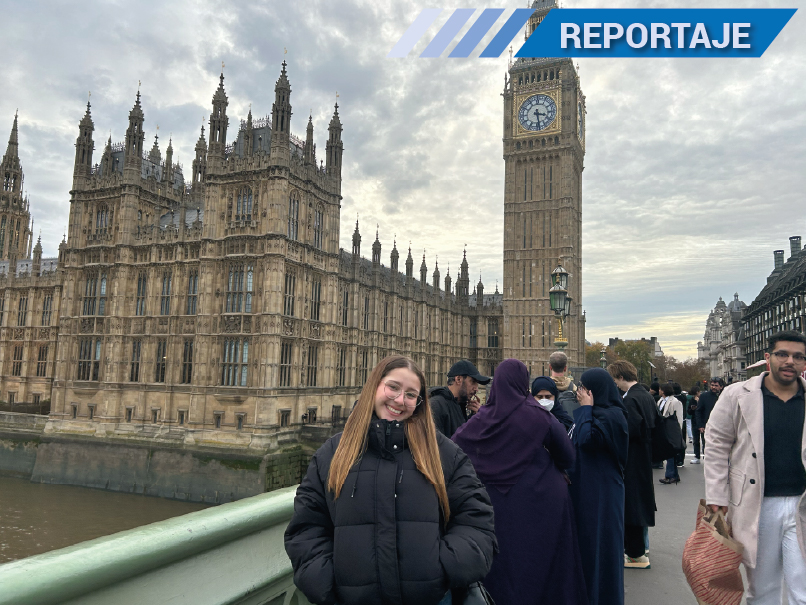
The internationalization experience also benefits PUCV students. Benjamín Maturana, a Mathematics Education student, participated in a student exchange in the city of Pontevedra, Galicia, Spain, which he considered decisive for its professional training.
“One of the benefits the University gave me was great financial support through its scholarships and benefits. Thanks to this support I was able to pay for my airfare and two months of living expenses. Living and studying abroad is an experience that impacts you, because you face a different academic life and culture. Getting to know other experiences about how other primary and secondary students learn greatly improved my professional training”, he noted.
Like them, more than 3,500 undergraduate PUCV students have taken part in international exchange programs, taking classes and internships in universities, companies, NGOs and foundations in different countries.
Internationalization and Research
Internationalization also is a strategic pillar for research and academic development. During the period between July of 2025 and June of 2026, 495 academic permits were authorized, destined to national and international activities of our teachers and researchers.
The great majority of these authorizations were precisely for academic activities, with 253 permits, that correspond to 51% of the total. In addition there are 30 service commissions, 13 academic improvement permits and a post-doctoral stay, reflecting an active institutional policy in support of academic mobility and continuous improvement.
Between 2022 and June of 2025, the university welcomed 153 visiting professors, coming from 27 countries and received in 17 academic departments, which demonstrates that internationalization is no longer an isolated activity but an institutional policy that benefits the sciences, engineering, humanities, social sciences and arts transversally.
Internationalization in research has become one of the main drivers for development of the world’s universities of excellence. The creation of frontier knowledge is no longer produced in an isolated way nor exclusively in labs or research centers in a sole institution.
For Mónica Cárdenas-Claro, Director of Research at the PUCV: “The research developed by academics has a central role in the internationalization of the PUCV, since it allows the faculty to join global networks from a place of tangible capabilities and contributions.
The scholar highlighted the institutional participation on initiatives such as Horizon Europe, Jean Monnet and Erasmus, which demonstrates that: “the capabilities of university scholars are valued internationally and their researchers collaborate in high-level projects, contribute to the solution of common challenges and bring knowledge into strategic areas”. This integration strengthens the international recognition of the PUCV and expands the opportunities for exchange, training and collaboration for the whole university community.
As an example, the year 2025 was a particularly significant milestone for the PUCV, since it was awarded 11 International Engagement Promotion projects (FOVI, for its name Spanish), establishing for the first time, a relevant difference in relation to the national second place, who were awarded 7 projects.
Looking into the centenary, internationalization of research acquires an even greater strategic relevance. From the work developed with the Columbus Network, seven great cores of scientific capabilities have been identified as having potential and international projections: astronomy and astrophysics; sustainable agrofoods systems; artificial intelligence and computer engineering; health and wellbeing; education and inclusion; climate change, water and biodiversity; and environmental biotechnology and resource valoration”. These areas agree with fields in which the PUCV has critical mass, recognized scientific productivity and national and global impact potential.
Internationalization creates benefits that transcend student mobility. Strategic alliances strengthen international research networks and facilitate joint developments with universities of recognized prestige.
The director noted that the current challenge of international research is to move forward from merely collaborative participation towards a greater capacity to articulate relationships and lead international projects. In this way, the work with the Columbus Network, among others, and the creation of capability portfolios allow to connect university research with other territories and productive sectors.
“Internationalization of research no longer depends exclusively on individual initiatives and becomes an institutional capability to create alliances, attract opportunities and visualize knowledge created from our alma mater internationally”, the scholar noted.
Therefore, the challenge is not only to increase participation of our scholars on international projects, but also to strengthen the conditions so the university can call, articulate and lead high-impact research, establishing a more strategic, sustainable and recognizable presence in the global research ecosystem.
With a sustained strategy of international cooperation, mobility and collaborative research, the Pontificia Universidad Católica de Valparaíso continues to place its formative signature beyond national frontiers, reasserting its commitment to an education of excellence connected to the challenges of the world.
By Pablo Díaz
Strategic Communication Department