

Antarctica is no longer seen just as a remote ice and tourism landscape and has consolidated itself as one of the most promising frontiers for modern technology. Scientists from the Pontificia Universidad Católica de Valparaíso (PUCV) and the Universidad de São Paulo (USP) in Brazil have launched AntarBio, an ambitious international project that seeks to extract microorganisms from the white continent to develop sustainable and high solutions of added value.
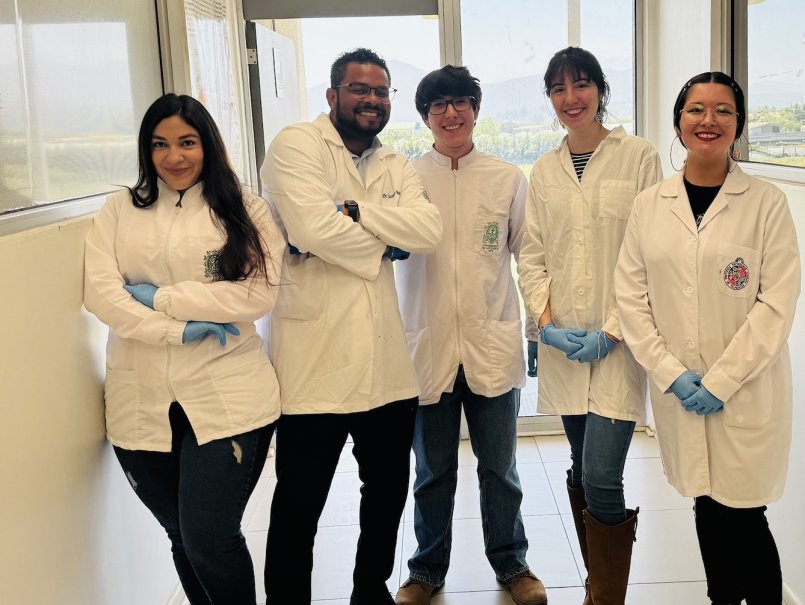
The initiative, funded by the National Agency of Research and Development (ANID) in Chile, together with the Foundation for the Research Support of São Paulo (FAPESP) in Brazil, is led by Cassamo Mussagy, scholar from the School of Agronomy and director of the Laboratory of Sustainable Bioprocesses Development (LABISOST for its name in Spanish) of the PUCV, together with coordinator Angie Caicedo and the principal scholar from USP, Adalberto Pessoa Junior.
The project, that initiated its execution last February and will extend for three years, its fully operational. According to Mussagy, the expertise of Chilean scientists is related to biotechnology, the prospect of new biomolecules that have added value and in this case, the use of agro-industrial residue.
The secret of survival: rare carotenoids
The heart of the investigation is literally frozen. Scientists extract extremophile bacteria directly from the ice in Antarctic Chilean Territory. Due to the millions of years of adaptation to extreme environmental conditions – such as ultraviolet radiation, extreme cold and oxidant stress – these microorganisms have developed pigmentation as a defense mechanism.
Known as rare carotenoids (specifically of the C50 type), these pigmentation are biomolecules with antioxidant and photoprotector properties and exponentially superior to those found in the traditional market, such as beta-carotene found in carrots or lycopene found in tomatoes.
“We have noticed that these Antarctic microorganisms survive under extreme conditions. This causes them to develop certain defense mechanisms, which are pigmentations called carotenoids, that have bioactive properties and the ones we use”, the professor explained.
Mussagy highlighted the disruptive potential of these molecules: “Within this group of pigmentations, there are some whose chemical structure gives them an exceptional anti-oxidant ability. For example, beta-carotene from carrots is good, but this one that we found in the Antarctica can be up to six thousand more powerful. What we look for are molecules that are under-studied that only possess these Antarctic microorganisms and have a greater potential than those we have now”.
Science with commercial and green impact
The final goal of the AntarBio project is technological transference to cosmetic, pharmaceutical, Food and nutraceutical industries, creating from natural high-power sunscreen to cardio protector components. Pharmaceutical companies in the region have already expressed their interest and are closely following the progress of the project.
To guarantee bioprocesses are market competitive, the research incorporated from the first day a life cycle analysis (ACV) and technoeconomic analyses (TEA), ensuring the use of green solvents and sustainable environmental processes.
“The final goal is to materialize a technological transfer that will place Latin America as a leader in applied biotechnology of high added value. The project not only has scientific goals, but it seeks real economic and social impact under sustainability standards, from the use of green solvents and microorganisms; we attempt to make it environmentally and economically sustainable”, Mussagy emphasized.
With a multidisciplinary team that combines microbiology, genomics, metabolomics and engineering of bioprocesses, AntarBio seeks to position the region as a global leader in applied biotechnology.
With agroindustry residues
The real sustainable milestone for AntarBio lies in how these microorganisms will be grown once out of the ice. In order to avoid a negative impact and comply with Sustainable Development Goals (SDG), the biotechnological platform will use an circular Economy strategy: feed the bacteria with residue from agroindustry of both countries. Chile will contribute husk from the viticulture industry and avocado residue, while Brazil will add molasses and sugar cane husk.
“Microorganisms need food, a source of carbon and nitrogen in order to grow. We will benefit from the fact that Chile produces many residue from the viticulture industry and Brazil produces many from sugar cane. Our lab has been researching for several years how to appraise these agro-industrial sub-products through biotechnological processes, so we know its potential very well. Now we will use them as food so these Antarctic microorganisms can grow and produce compounds of interest”, explained the PUCV School of Agronomy scholar.
As professor Mussagy concluded: “Antarctica represents one of the greater unexplored biotechnological reservoirs of the planet and it is time that we begin to make this into functional and sustainable products. This project has this vision”.
By Erika Schubert
Strategic Communications Department