

Created to address one of the main current challenges in food science and health – the fragmentation in research on diet, intestinal microbiota, bioactive compounds and sustainability – the NutriSENSE initiative seeks to integrate knowledge from nutrition, microbiology, biotechnology, artificial intelligence, food science and sustainability. Its purpose is to develop personalized nutritional strategies that are more efficient and sustainable, with global level impact and projections.
Comprised by researchers and institutions in more than 30 countries, including universities, research centers, businesses, government institutions and international organizations, NutriSENSE is one of the more ambitious European networks in the fields of personalized nutrition, intestinal microbiome and bioactive compounds.
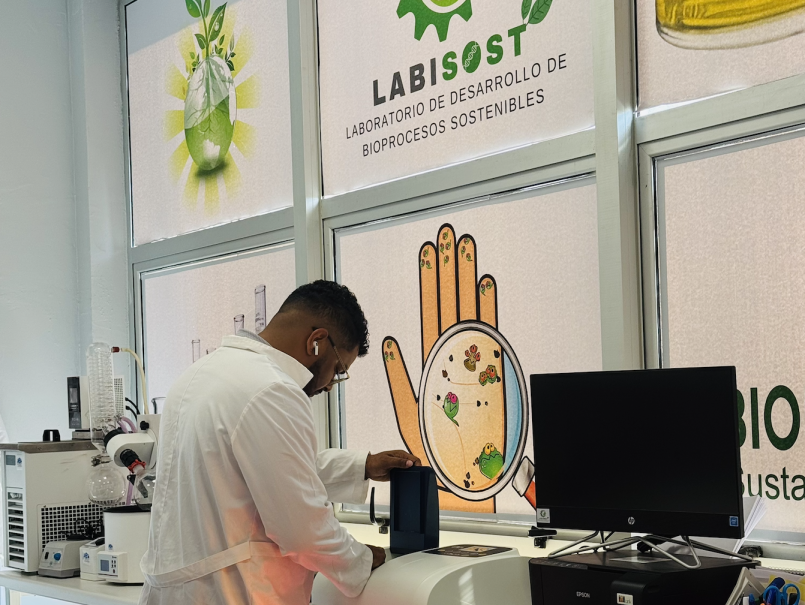
The scholar from the School of Agronomy and director of the Sustainable Bioprocesses Development Laboratory (LABISOST) from the University, Cassamo Mussagy, participates as an international member in this project, contributing experience on industrial biotechnology and the development of bioproducts from biomass.
According to Mussagy, the proposal of the NutriSENSE project seeks to position this initiative as a world leader in personalized nutrition and microbiome, promoting scientific, social, environmental and economic spaces, in addition to contributing to public policy that is aligned to the European Green Deal, the Farm to Fork strategy, and the Sustainable Development Goals (SDG) from the UN.
“NutriSENSE seeks to harmonize methodologies, create data that is interoperational between countries and apply artificial intelligence to generate nutritional recommendations that are personalized, efficient and accessible. The goal is to contribute to healthy aging and the reduction of chronic conditions. More than 30 countries are involved, especially from Europe, in addition to international partners. It is an honor for the PUCV to be a part of this initiative; it is an opportunity to bring this technology to Chile and help in critical areas such as health and healthy aging”, the scholar pointed out.
Artificial Intelligence and Bioinformatics
Applying Artificial Intelligence (AI) and advanced bioinformatics to analyze, identify and quantify molecules such as DNA, RNA, proteins or metabolites within an organism at a global level and simultaneously, are some of the tools this project includes in order to understand interactions between bio-active organisms, microbiome and health.
Opposite to traditional biological analyses, which study only one gene or one protein at the time, these methodologies adopt a holistic approach to understand how these molecules interact to create life, health or disease.
“Regarding Artificial Intelligence, the project seeks to create personalized programs in the future. For example, through a blood analysis, it will be able to know exactly what to consume in a personalized way. We are an international collaborator, and we are honored that they especially sought our laboratory at the PUCV among so many other universities in Latin America”, LABISOST’s Director added.
Young Researchers
At the same time, we highlight the committment of NutriSENSE to international inclusion, gender equality and training young researchers. The network currently has 64,2% of female presence; 21 young researchers and innovators; and the participation of European countries, neighbor countries and international partners, including Chile.
“The Pontificia Universidad Católica de Valparaíso is the only chilean institution participating of this initiative and one of the two Latin American institutions joining the network, strengthening the presence of chilean science in a high-impact international program. Through this, young researchers have access to mentorships and advanced technology with the goal of adapting these innovations to the social reality of Chile. In sum, I am proud that our university has international recognition and contributes to the development of global impact science”, Cassamo Mussagy concluded.
By Erika Schubert
Strategic Communications Department