


The prestigious scientific journal Nature published one of the broader and detailed studies developed to date about global obesity trends. The work was coordinated by the NCD Risk Factor Collaboration (NCD-RisC) international consortium, led by the Imperial College London, and included the participation of a team of more than 1,900 researchers from all over the world.
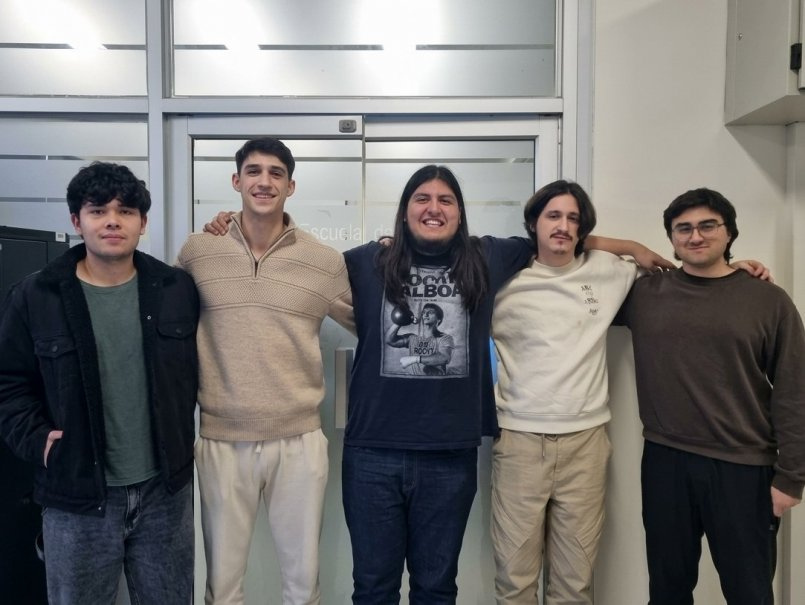
Among this select group of scientists is Júlio Mello, scholar from the School of Physical Education at the PUCV, who acted as an international collaborator of the consortium. His incorporation in this cutting-edge analysis – that examined the nutritional evolution of 200 countries and territories between 1980 and 2024 – places PUCV on the frontline of global epidemiology research.
A concerning diagnosis: the “speed” of obesity
One of the great novelties of this investigation is that it introduces the concept of “obesity speed”, a metric that measures how much the prevalence of this disease increases each year. The results show a very unequal reality: while several developed countries have managed to stop or stabilize child obesity under 10%, in Latin America numbers continue to accelerate.
When looking at the local map, it is a complex scenario. Chile is within the group of countries where the prevalence of obesity is rapidly moving forward, and strongly affecting boys, girls and teenagers.
“Obesity cannot continue to be understood solely as an individual or biological problem. There are important social, economic, cultural and environmental components that explain why some countries were able to stabilize the trend while others continue to accelerate it”, the PUCV scholar stated. He also added that this phenomenon responds to a nutritional transition that the country has not yet been able to control.
From research to social action
Beyond diagnosis, the value of the participation of the PUCV in this international consortium lies on the ability of translating scientific data into tangible solutions for the country. In the face of a national scenario characterized by a progressive and significant rise of the pathology, Julio Mello emphasized that international evidence points towards one direction: intervention must happen during the early stages of life.
“The characteristic of Chile is that it presents progressive and significant increase of obesity, so intervention must concentrate on early stages in the first place, with a focus on children and teenagers. Successful international experiences show that timely intervention in young people allows to revert growth curves of this disease. This means that the approach must be preventive, so we avoid reacting once the problem is already consolidated in adulthood. In this sense, the School of Physical Education at the PUCV has undertaken a strategic and guiding role in the design of projects that will directly impact the social fabric, engaging with the school community, sports clubs and other contexts where we find these age groups”, the scholar explained.
To achieve this impact, Mello pointed out that Community Engagement projects at the PUCV should actively expand towards the territory. The goal is to cohabit and intervene everyday spaces of children and youth, which includes building bridges directly with the school community, but also joining the dynamics of neighborhood sports clubs and any other recreational environments where young people interact on a daily basis.
Through this contribution to science and community, the PUCV reasserts its public commitment, leading the urgent call to strengthen nutritional policies, transform schools into more active spaces and ensure that the promotion of physical activity and mental health effectively reaches the more vulnerable communities of the country.
To review the article published by the journal Nurture, those interested must visit the following link.
By Erika Schubert
Strategic Communications Department