

With a Latin American emphasis and the participation of more than 400 scholars and researchers from Chile and the world, the XXIV Congress of the Chilean Linguistics Society (SOCHIL, for its name in Spanish) “Diachronies and Synchronies: tradition and innovation in language studies” took place under the organization of the Literature and Language Sciences Institute (ILCL, for its name in Spanish) of our university.
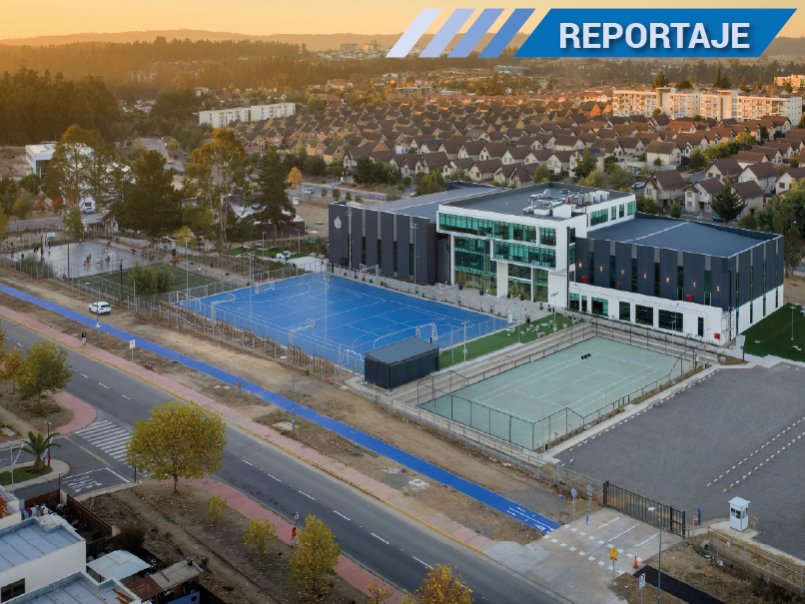
The congress held keynote lectures, practical workshops, thematic rountables, presentations and exhibits of academic posters, with the participation of students from the Colegio International of Valparaíso, who were advised in their research by students from the PUCV Applied Linguistics Master’s program.
The three-day event gathered language science specialists, undergraduate and graduate students and scientific associations from the field, such as the Language and Cognition Laboratory (PUCV), the Center for Research on Language and Cognition Development (CIDCL-UV) and the Center for Inclusive Education (PUCV).
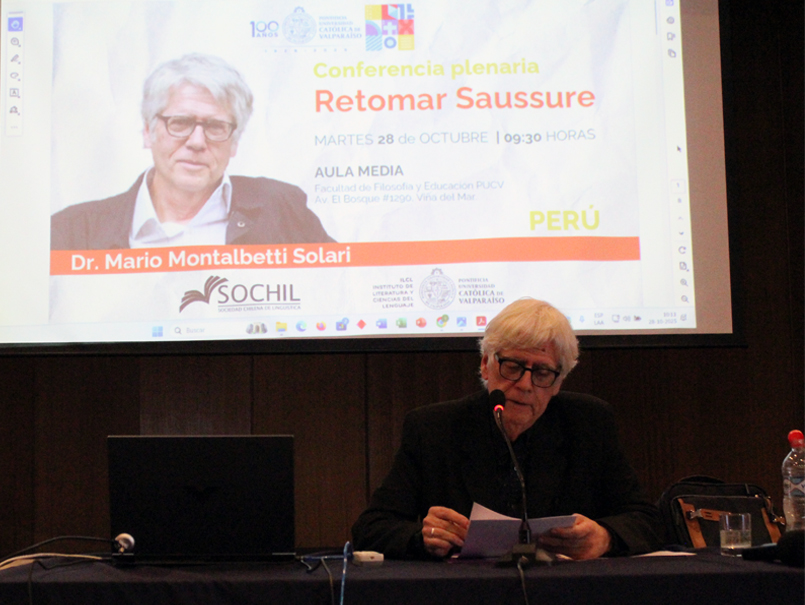
The keynote lectures were given by Mario Montalbetti (Perú), poet and professor at the Pontificia Universidad Católica de Perú; Soledad Chávez (Chile), from the Universidad de Chile; Gema Valdés (Cuba), from the Universidad Central Marta Abreu de las Villas; and Pilas Oplustil (Chile), Senior Machine Learning Researcher at Huawei Technologies.
At the event, researchers addressed the implications for Philosophy of the Language of the foundational text of the modern linguistics of Saussure; applied studies of missionary lexicography in Chile; the influence of African Languages in Caribbean’s spanish and the role of computational linguistics in the ChatGPT era.
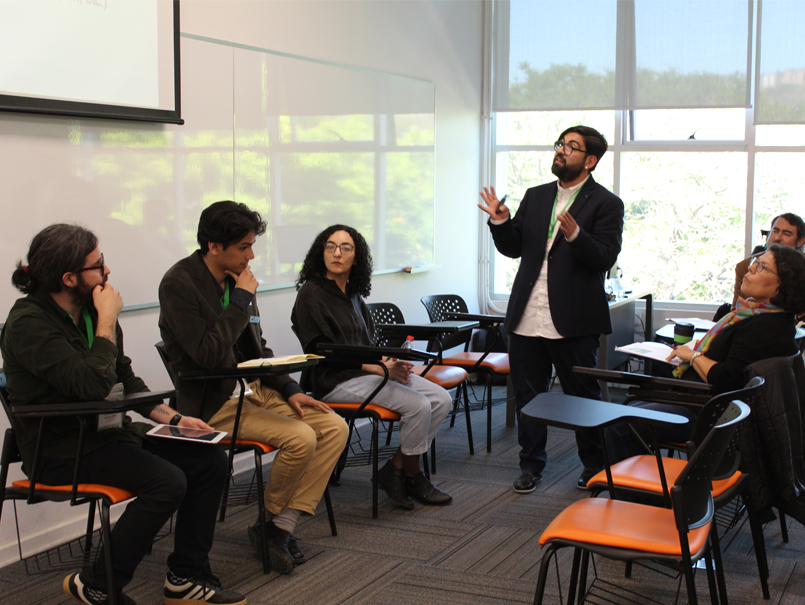
Pedro Alfaro, director of the ILCL, said that the lectures sum up “the idea of this congress, where the most traditional to the most modern (of linguistics) was reviewed. It is a good representation of the learning and knowledge that spread around during the congress”. The scholar added that “our interest is that the (linguistic) community gets to know each other, grows and communicates. Scientific societies have that role: to organize themselves, discuss and create more science, but also to make of scientific knowledge a public discussion”.
Gema Valdés, member of the Cuban Academy of Language, explained that “we cannot talk about Latin American culture without including Africa. The contact between cultures, so important in understanding who we are, becomes a line of work for linguists and linguistic anthropology, which is the field I have devoted to”. In this sense, the researcher presented, from their work in Congo, the “Theory of Kikongo”, indicating that “it is very complex from a cultural and linguistic standpoint. It is a language very similar to spanish in terms of phonetics, and it differentiates in morphosyntax. The lexical (appears in spanish) both in ritual discourses, in phraseology, as well as everyday language”.
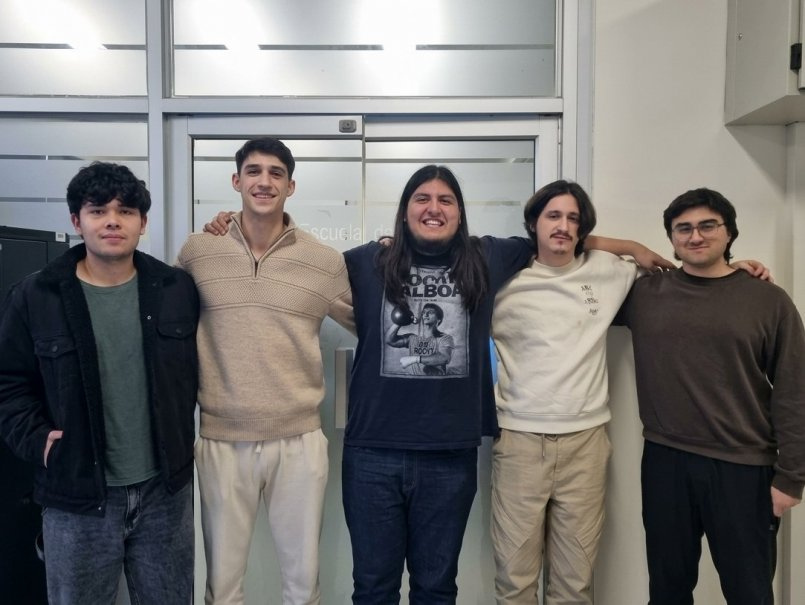
During the congress, the Young Linguists Groups of Chile and the Chilean Linguistics Society carried out opportunities for dialogue and discussion with their associates from throughout Chile, and the new directors board of the Chilean Linguistics Society was announced.
The XXIV Congress of the Chilean Linguistics Society was carried out with the support of the Vicerectory of Administration and Finances of the General Direction of International Affairs of our university.
By Valentina Olivares
Literature and Language Sciences Institute