

The 10th World Congress on School Climate and School Violence (WCSV2025) is an international event that gathers specialists, teachers and authorities from more than 15 countries and 180 universities. This activity is organized by the International Observatory on School Climate and Violence Prevention (IOSCVP) together with the Research Center for Inclusive Education (EduInclusiva) from our university, with the support of the Latin American Network for School Climate, the Chilean Network for research on School Climate and School Violence (composed by six universities in the country) and organizations such as UNESCO, UNICEF, the Chilean Ministry of Education, the Chilean Association of Municipalities and SLEP Valparaíso.
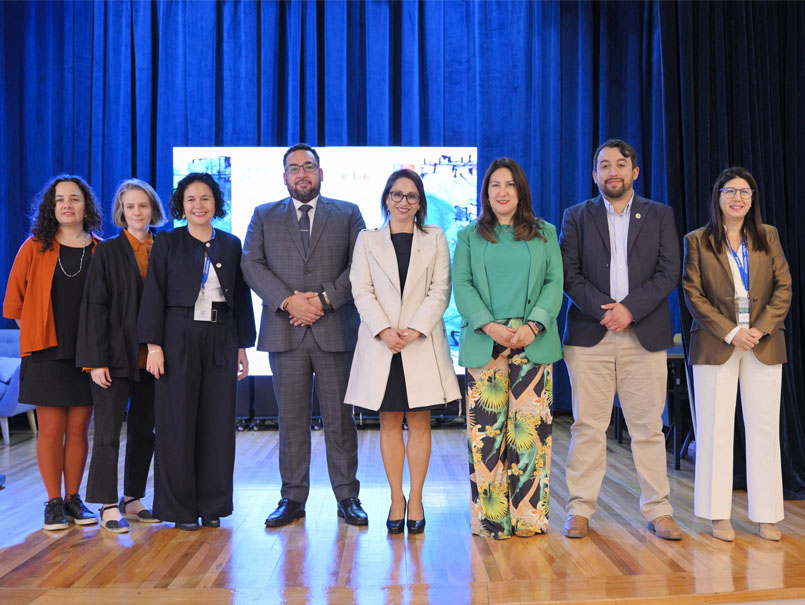
On the occasion, Verónica López, director of PUCV Eduinclusiva and president of the IOSCVP, noted that “school violence is not an isolated problem, but global. This congress is an opportunity to generate joint answers that will directly impact the life of millions of students”.
Likewise, she highlighted the profound meaning of this international gathering: “School climate is not only a means to achieve better learnings, but an end in itself, because in learning to live with others the possibility of building peace and sustain life together strengthens”.
From the Central Headquarters of the PUCV in Valparaíso –port, heritage and university city - Verónica López underscored the importance of opening “windows to dialogue”, inspired in the “Ventanas de Valparaíso” art piece by local artist Osvaldo “Gitano” Rodríguez, which gives a visual identity to the Congress.
For her part, Jacqueline Páez, Vicerector of Community Relations at the PUCV, noted that the event reasserts the University’s commitment to education centered on wellbeing and community life: “Schools reflect what we are as a society, and at the same time, they are the spaces in which democracy is built. Promoting respect and good relations is a task that engages all educational actors, but especially the institutions that provide teacher education. We take on this challenge as part of our centenary mission at the service of our country”.
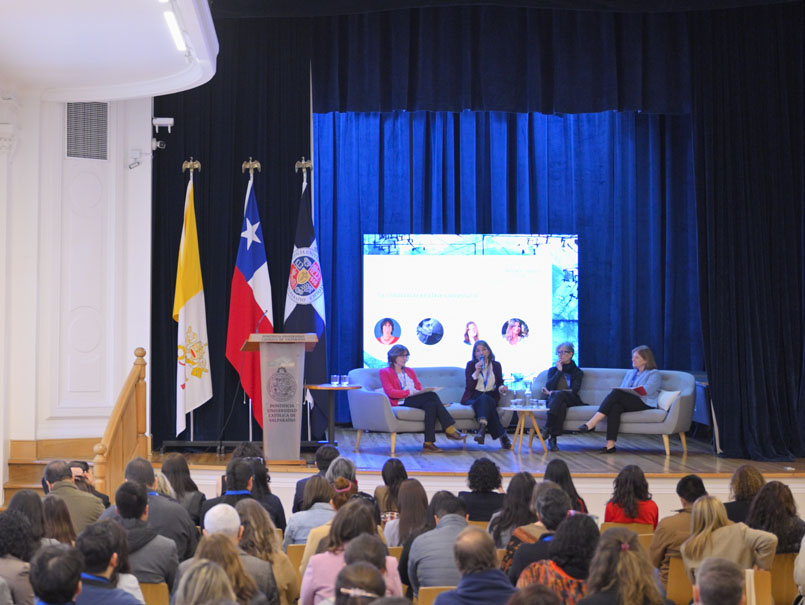
She added that “this year we seek to better understand the complexity of school problems, distancing ourselves from simplistic messages and guiding our decisions about where to invest our human and economic resources to promote safe and respectful educational communities”.
Educational Policy and school wellbeing
For his part, Nicolás Cataldo, Minister of Education, valued the progress of the chilean educational system after the pandemic. He noted that learning Indicators show positive historical results, and that school disengagement has reached its lowest level in the last 15 years. “Relationships between students must be understood as learning, not only as a disciplinary aspect. This approach must be worked with since the first years of schooling, when children begin to socialize, self-regulate and coexist”, she complemented.
The minister referred to the National Policy for Educational Coexistence update (2024-2030), which expands its reach to the whole educational system, along to measures such as the professionalization of those in charge of the field, the creation of observatories for wellbeing and school climate, and the incorporation of Chile to the Safe to Learn international network fostered by UNICEF.
“We trust that the international exchange of this Congress will strengthen pedagogical strategies and evidence-based decisions to guarantee safe, inclusive and democratic schools”, he concluded.
About the Congress
The Congress includes more than 200 presentations and nine keynote lectures by renown international experts such as Jonathan Cohen (National School Climate Center, U.S), Cecilia Fierro (UNAM, Mexico), and Rosario del Rey, co-chair at the International Observatory for School Climate and School Violence Prevention and professor at the Universidad de Sevilla (Spain). Del Rey mentioned in her discourse that “this year at the Congress we want to deepen our understanding of violence problems in educational centers. There is a high degree of sensibilization, but we need to go beyond simplistic messages and better understand the causes and dynamics that sustain them. We also must improve the tools that allow to measure the magnitude and associated factors to identify the more efficient interventions and guide decision-making about where to invest human and economic resources aimed to promote healthy educational environments”.
The WCSV2025 also incorporates a territorial dimension through the Intergenerational Dialogues for School Climate, developed together with UNESCO, UNICEF, the Mineduc and Valparaíso SLEP. In these dialogues, 12 educational communities of the region share experiences and proposals about good relationships, citizenship and participation. The conclusions of these spaces will be presented during the Congress, integrating the voice of girls, boys and teenagers to the global debate.
The event gathers the international scientific and educational community to share evidence, policies and experiences about the creation of healthy school environments. Its tenth edition –the first in South America – places Chile, Valparaíso and the PUCV as global models in the promotion of an inclusive, democratic and violence-free education.
More information at www.wcsv2025.cl.
By Natalia Cabrera
Research Center for Inclusive Education